
ZONE1
ZONE1 is viennacontemporary’s signature platform for emerging talent. Now in its tenth year, this acclaimed section presents solo exhibitions by ten outstanding artists under 40 with strong connections to Austria.
|
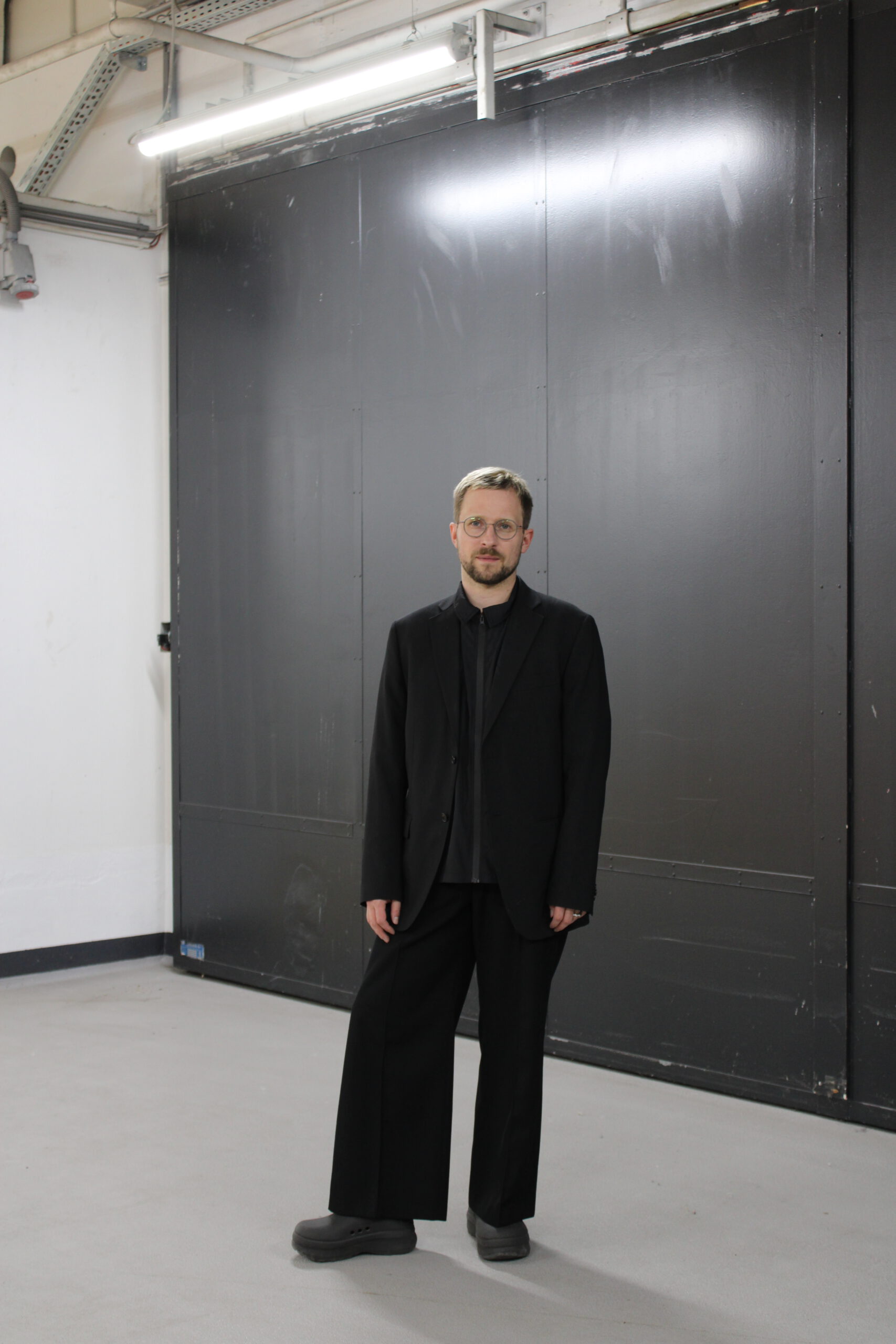
For this year’s ZONE1, Curator Aliaksei Barysionak brings together artistic practices that engage with themes of migration and displacement and critical feminist perspectives. |
STATEMENT BY THE CURATOR
This year’s ZONE1 turns a critical lens on a world twisted by its contradictions. Anchored in the vibrant artistic life of Vienna’s multifaceted landscape, ZONE1 connects emerging voices that speak to us in a clever, intense, and persuasive language, while engaging viewers with direct and visceral approaches. Rather than adhering to a single aesthetic or medium, the selection navigates a diverse terrain of formal and political inquiry—ranging from feminist figuration and social critique to conceptual strategies addressing memory, displacement, and power. Some artists speak directly from histories of rupture and dislocation; others offer incisive reflections on systems of control, technological obsolescence, and the materialities of everyday life. Oil painting and digitally altered images register violence and dispossession. Plastic bags deliver unexpected truths. Furniture forms interrogate ownership, administration, and inherited authority. Slate and stained steel carry traces of memory and failed innovation. Standing at the intersection of the political and the aesthetic, ZONE1 addresses questions about the diverse conditions we bear in a moment of planetary emergency. Sometimes with playfulness, sometimes with stark immediacy.
Born in 1992 in Belarus, Aliaksei Barysionak is a curator and writer whose work operates at the nexus of contemporary art, critical theory, and political thought. His curatorial practice draws on transnational dialogues and post-socialist histories, with a focus on emerging voices and underrepresented geographies.
A former fellow at the Vera List Center for Art and Politics at The New School, New York (2022–24), and curator of the Matter of Art Biennale 2024 in Prague, Barysionak brings a grounded, research-based approach to exhibition-making. Based in Vienna, he positions himself as a mediator between Eastern and Western Europe. His writing has appeared in e-flux journal, springerin, and L’Internationale Online. Since 2020, he has been an integral part of the viennacontemporary team, where he works closely with international galleries, with a particular emphasis on practices emerging from Central and Eastern Europe.
ZONE1 takes place with the kind support of the Federal Ministry for Housing, Art, Culture, Media, and Sports (BMWKMS).
PARTICIPATING ARTISTS
Melanie Ebenhoch | GALERIE BRUGGER
Hélène Fauquet | MEYER*KAINER
Tobias Izsó | Christine König Galerie
Terese Kasalicky | GALERIE3
Kateryna Lysovenko | TBA
Fabian Reetz | SOLO Gallery
Driton Selmani | Galerie Ernst Hilger
Natália Sýkorová | VUNU
Huda Takriti | CRONE
Dominika Trapp | Kisterem
Ebenhoch works at the intersection of painting, sculpture, and installation. She draws from a range of themes from art history to film, psychoanalysis, and architecture, while using optical illusions and cinematic representations to create moments of irritation, gaps, and slippages in the way we perceive reality. Ebenhoch is interested in the “optical unconscious”, which lies underneath the surface and realm of visuality, opening up “an investigation of the slippages between signifier and signified, that characterize both the structure of the individual psyche and the shared fantasies of a common culture” (Laura Mulvey) concealed and reproduced in narratives of art, design, history, and film.
Melanie Ebenhoch (*1985, Feldkirch, AT) studied at the Hogeschool voor de Kunsten Utrecht and received her MFA from the Sandberg Institute in Amsterdam. Her work has been exhibited at Kunsthalle Bratislava, Galerie Martin Janda (Vienna), Galerie Tobias Naehring (Leipzig), Hester (New York), and the Leopold Museum (Vienna). She is represented in the collections of the Museum der Moderne Salzburg, Kunsthaus Bregenz, and Belvedere 21 (Vienna). Recent presentations include solo and group exhibitions at Kunsthalle Wien and Belvedere 21 in Vienna, Galerie Eva Presenhuber in Zurich, and Union Pacific in London. She is currently based in Vienna and Brussels.
Fauquet’s work explores the residues left by photography and the movement of images. She adopts a singular approach to photography, considering the image as a sculptural form, which allows her to explore the fluidity and materiality of the medium. At the center of her practice is a reflection on the mysterious power of images. Her constellations or ‘image-systems’ play on the contextual ambiguity of her chosen images, challenging our capacity (or lack thereof) to read them coherently within the given frame. Additionally, her work draws inspiration from natural forms, like the organic structures found in seashells that inspire the rocaille. This fluidity of the pieces has an aquatic quality that results from the interweaving of scrolls, undulations, and waves, twirling and crashing to ultimately dissolve into abstraction.
Hélène Fauquet (*1989, Saint-Saulve, FR) studied at the Staatliche Hochschule für Bildende Künste-Städelschule in Frankfurt am Main. Her work has been exhibited at Kunsthaus Glarus, Kunstverein Nürnberg, Édouard Montassut (Paris), and Schiefe Zähne (Berlin), among many others. She was awarded the laureateship of the 2-12 program at the Cité Internationale des Arts, a lectureship at the University of Applied Arts Vienna, and has been featured in publications such as Artforum, ArtReview, and MAY. Recent presentations include solo and group exhibitions at MEYER*KAINER in Vienna, Galerie Max Mayer in Düsseldorf, Rodeo in London, and Ulrik in New York. She is currently based in Vienna and Paris.
Izsó’s work spans sculpture, installation, and photography, with a particular focus on assemblage. He explores themes such as domesticity, memory, and identity, using everyday objects as metaphors for broader existential questions. Through the precise arrangement of materials like wood, textiles, and found objects, he creates tactile, multilayered installations that highlight the tension between the familiar and the uncanny. His work is marked by an engagement with contradictions between order and entropy, intimacy and alienation.
Tobias Izsó (*1997, Vienna, AT) studied photography and fine arts at the University of Applied Arts Vienna, and sculpture at the Academy of Art, Architecture, and Design in Prague. His work has been exhibited at Lentos Kunstmuseum Linz (Touch Nature, 2025), Hunt Kastner Project Space Prague (Between the Doors, 2024), Galerie Schloss Wiespach (Hallein), Fotogalerie Wien, Kunst Haus Wien, OFF Festival Bratislava, and Fotomuseum Winterthur. Izsó was awarded the Emanuel & Sofie Fohn Scholarship, the Start Scholarship for Fine Arts by BMKÖS, and the Fred Adlmüller Scholarship. He is currently based in Vienna.
Kasalicky’s practice explores the ornamental as a charged cultural form, focusing on the tassel as a symbol of hierarchy, ritual, and power. In her sculptural installations, what was once decorative becomes central, inhabiting and disrupting space through minimal forms and reduced color palettes. Her works transform industrial ropes into modular, hand-dyed spatial drawings that oscillate between the organic and the artificial, and between the solid and the ephemeral, questioning the fetish of representation.
Terese Kasalicky (*1988, Klagenfurt, AT) graduated from the Academy of Fine Arts Vienna, where she studied under the tutelage of Gunter Damisch and Veronika Dirnhofer. Her work has been exhibited at Wien Museum, Museum Moderner Kunst Kärnten (Klagenfurt), Artothek des Bundes (Vienna), and in numerous galleries, art spaces, and fairs. She was awarded the Carinthian State Prize for Fine Arts and has received several scholarships supporting her large-scale indoor and outdoor installations. Together with Heti Prack, she runs the art space ES49 and the travelling exhibition project Tombola. She is currently based in Vienna.
Lysovenko’s work explores the entanglement of bodies, land, and history, transforming the pathos of socialist realism into fragile, porous spaces of pain, care, and joy. Seeing land as living matter—womb, cosmos, and body—her paintings evoke the violences it endures and its quiet regeneration. Rendered in reds, pinks, and greens, her figures and landscapes melt into each other, suggesting transparency, intimacy, and resilience. In her recent paintings, her imagery traces non-binary relations where bodies and environments merge, sustain, and transform one another.
Kateryna Lysovenko (*1989, Odesa, UA) studied at the National Academy of Fine Arts and Architecture in Kyiv. Her work has been exhibited at the Biennale Matter of Art (Prague), the 60th Venice Biennale, Ludwig Museum Budapest, and Museum of Modern Art Warsaw. Her work is included in major institutional collections such as the Neue Galerie Graz, MSN Warsaw, and the Ukrainian Museum of Contemporary Art. Recent presentations include solo and group exhibitions at Kunstverein Hannover, Karma International in Zürich, Kunsthaus Graz, and Arsenal Gallery in Białystok. She is currently based in Vienna.
Reetz’s artistic practice negotiates how subcultural strategies are connected to historical events as well as to social and economic transformations. He places particular focus on the extraction and use of slate in Thuringia, relating the material with the codes of the gothic youth culture that arose in the declining German Democratic Republic (GDR). In his large-scale installations, Reetz combines traditional crafting techniques with digital fabrication methods. Gradually, a speculative archive takes shape, interrogating the characteristics of gothic culture shortly before and after the fall of the Berlin Wall, examining their connection to hidden rules of ever-present surveillance and small-town communities, as well as to economic scarcity as a driving force behind its emergence.
Fabian Reetz (*1997, Bad Salzungen, DE) studied Fine Arts at the Bauhaus University Weimar and is continuing his studies at the Academy of Fine Arts Vienna. His work has been exhibited at KunstHaus Potsdam, Soy Capitán (Berlin), Cazul101 (Bucharest), and Klocker Museum (Innsbruck). Recent exhibitions include Exile Erfurt, Kunsthaus Potsdam, Soy Capitan Berlin, and Cazul101 Bucharest. He is currently based in Vienna.
Selmani approaches the idea of perceived reality by deconstructing formations of social, political, and cultural topics that have been embodied around him. At a young age, he was told to worship a country that no longer existed, which caused him to form a basis of skepticism towards any supposedly given reality. He later used this as a beneficial tool to reconstruct his beliefs into visual artifacts. In 1999, old simulacra were replaced by new simulacra; the ornaments of a previous space were refurbished to unfold with new meanings but also new uncertainties. Selmani confronts himself as a spectator of this “ongoing event”, and positions himself as an actor, enacting his performances based on his personal histories, beliefs, and doubts.
Driton Selmani (*1987, Doganaj / Kaçanik, XK) studied at AAB Faculty of Arts in Pristina and earned a MFA fromt Arts University Bournemouth in Poole. His work has been exhibited at Manifesta 14 Prishtina, MAXXI (Rome), Ludwig Museum Budapest, and Kunstraum Niederösterreich (Vienna). He has received residency awards and prizes from CEC Artslink (New York), Cultural City Network Graz, and Rosa Luxemburg Foundation (Berlin). Recent presentations include solo and group exhibitions at Museum of Contemporary Art in Skopje, Kahan Art Space in Vienna and Budapest, Mediterranea Biennial in Ancona, and Marrakesh Biennial. He is currently based in Pristina.
Sýkorová operates at the intersection of visual art, research, and performance, developing speculative strategies informed by technological and ecological debates. Her practice explores technology, ecology, and narrative through performance, sound, and interface. Her dystopian installations foreground the chill and sharp edges of alluring yet disquieting metal objects, embedded within modifiable ecosystems. These systems often employ aesthetics of estrangement as a method to access unfamiliar modes of intimacy and attention. Sýkorová engages with topics of climate crisis and survival, the entanglements of biological and technological processes, including water systems as agents of action and autonomous hormonal infrastructure inflicting our bodies. Through these evolving forms, she seeks to tell stories that open space for equilibrium between bodily, technological and planetary infrastructures.
Natália Sýkorová (*1998, Prague, CZ) studied at The Bartlett School of Architecture at University College London and at the Academy of Arts, Architecture and Design in Prague, where she is currently pursuing postgraduate research. Her work has been shown at Kunsthalle Bratislava, ACUD Galerie (Berlin), MeetFactory (Prague), Vunu Gallery (Bratislava), and MuseumsQuartier (Vienna), which also hosted her as a Q21 resident.. She is currently based in Prague.
Takriti’s practice centers on the issues of archival erasure and the resulting gaps in (hi)storical narratives. She uses video and installation to question hidden histories within colonial and state archives. Her work analyses how systems of power define memory through a decolonial and feminist lens–questioning the construction and production of historical narratives, as well as the potential that archival contamination can carry as a way for surviving archival gaps.
Huda Takriti (*1990, Damascus, SY) studied at the Faculty of Fine Arts in Damascus, at the University of Applied Arts Vienna, and is currently pursuing a PhD in Practice at the Academy of Fine Arts Vienna. Her work has been exhibited at MQ Freiraum (Vienna), Kunsthalle Wien, mumok (Vienna), Škuc Gallery (Ljubljana), and Centre d’art Sa Quartera (Mallorca). She was awarded the Vordemberge-Gildewart Award, the Kunsthalle Wien Prize, the Camargo Foundation Fellowship, and the Han Nefkens–Museu Tàpies Video Art Production Grant. Recent presentations include exhibitions at Afro-Asiatisches Institut in Graz, Addaya Centre for Contemporary Art in Mallorca, and Philomena+ and Galerie Crone in Vienna. She is currently based in Vienna.
Trapp’s practice engages with peasant culture and its afterlives through objects and phenomena that occupy liminal spaces and act as dimension gates. Working across installation, performance, and image, she investigates how imagined and material landscapes are shaped by human intention and natural agency. Her recent work focuses on the motif of the trap as both an object and an infrastructure, a mechanism that redirects natural forces into systems of control, maintenance, and worldmaking. Through combining artistic intuition with critical research, Trapp explores how slow violence operates within domestic, emotional, and environmental spaces, revealing the structures it encloses and the possibilities for resistance and escape.
Dominika Trapp (*1988, Budapest, HU) studied at the Hungarian University of Fine Arts in Budapest. Her work has been exhibited at Trafó Gallery (Budapest), Karlin Studios (Prague), Baltic Triennial (Vilnius), Manifesta 14 Prishtina, and EVA International (Limerick). She was awarded the Esterházy Art Award and has participated in residencies at Art in General (New York), MQ (Vienna), and FUTURA (Prague). Recent presentations include projects at The Matter of Art Biennial in Prague, and EKO9 Triennial in Maribor, and solo and group exhibitions in Budapest, Prague, and Vienna. She is currently based in Budapest.


