
CONTEXT
Launched in 2024, CONTEXT focuses on artistic positions from the late 20th century, aiming to foster dialogue between artists rooted in the region and those working in broader international contexts and to highlight how today’s contemporary art scene has emerged out of a fascinating recent past.
|
For this edition, curator Samantha Ozer has expanded the framework of the section to consider CONTEXT in a broader sense – organizing ten presentations with a mix of solo and duo booths, and incorporating some contemporary pieces to present a cross-generational network. |
Across a diversity of media – from assemblage, formalist sculpture, drawing, and painting – and styles, there is an underlying desire for a radical examination of the human experience. With varying approaches, there is an attempt to create new forms and even portals to represent abstract feelings such as isolation, pain, resilience, and wonder, and to use art as a conduit for experimentation.
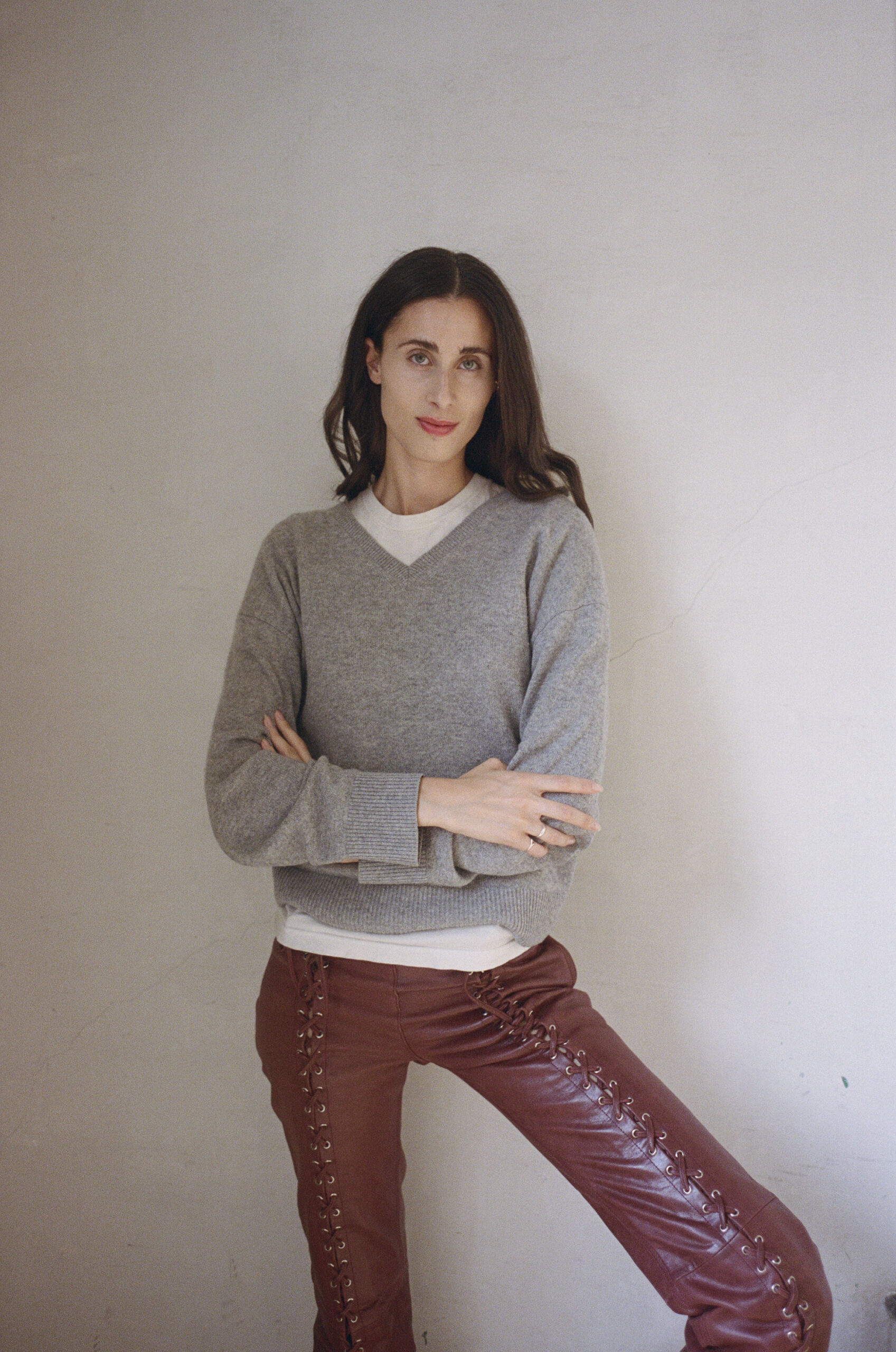
ABOUT THE CURATOR
Sam Ozer is curator-at-large at Canyon, a writer, and the founder of TONO, a nonprofit arts organization dedicated to time-based work. TONO hosts an annual festival across museums and music venues in Mexico City and Puebla, and has presented or commissioned work by over fifty artists in collaboration with leading institutions such as the Serpentine Galleries, the National Museum of Modern and Contemporary Art (Seoul), the National Gallery of Victoria (Melbourne), the Pérez Art Museum Miami, the Venice Biennale, WIELS (Brussels), Mudam (Luxembourg), and CAM Gulbenkian (Lisbon).
She was the inaugural video curator for both Feria Material and ZⓈONAMACO in Mexico City, and previously held curatorial roles at the Poetic Justice Group at the MIT Media Lab, as well as at the Museum of Modern Art and MoMA PS1 in New York.
PARTICIPATING ARTISTS
Robert Bosisio I Rodler Gschwenter Gallery
Giovanni Castell & Antonello Viola I Alessandro Casciaro
Marko Djurdjevic & Leopold Strobl I galerie gugging nina katschnig
Roland Goeschl I zs art
Kurt Hüpfner I Galerie Dantendorfer
Rashid Al Khalifa I Mario Mauroner Contemporary Art
Mariusz Kruk I MOLSKI gallery
Hermann Nitsch I Galerie Zimmermann Kratochwill
Hubert Schmalix I Smolka Contemporary
André Verlon I Kunsthandel Hieke
Bosisio’s paintings explore the poetic space between reality and imagination, using soft light and delicate layers of color. Blending abstraction and figuration, Bosisio transforms simple subjects into timeless, atmospheric works rich in feeling and depth. His recent works reveal a quiet dissolution of form – interiors fade into dreamlike memories, and figures linger in ethereal spaces. His signature blend of Renaissance softness and contemporary abstraction evokes a timeless quality that speaks to presence, memory, and spiritual resonance.
Robert Bosisio (*1963, Trodena, IT) is a contemporary painter known for his atmospheric, light-filled works that move between figuration and abstraction. He studied at the Academy of Fine Arts in Vienna and presents a captivating overview from his early works up to 2000, tracing his artistic evolution to the present day. In autumn 2025, he will feature alongside Wim Wenders in a major exhibition at the Zhejiang Art Museum in Hangzhou, China. His works have been shown in renowned exhibitions worldwide, including the Venice Biennale, the BP Portrait Award at London’s National Portrait Gallery, Haus Wittgenstein in Vienna, Art Center Hugo Voeten in Belgium, and institutions in New York, Tokyo, Shenzhen, and Cluj-Napoca. His works are characterized by delicate brushwork, subtle color shifts, and a meditative, timeless quality. He lives and works in Trodena and Berlin.
Castell’s previous works were characterized by strong objective and narrative elements, while his new cycle is almost introspective. The references he makes to other artistic movements, notably the iconography and the coloring of American abstract expressionism, highlight the close relationship that the artist perceives between the product of his imagination and reality as he experiences it, and the heritage left to us by the masters of classical painting. It represents a form of veneration, while simultaneously regenerating and reactivating his work. Castell draws inspiration and creative impulses from moments of peace and contemplation. According to the artist, this is rather like dreaming. Much is stored in our subconscious mind and can be conjured up in moments of peace. The pictures created in this way refer less to actual events or definite stories, but rather portray an underlying mood, the inner feelings and sentiments of the artist. However, they also incorporate allegorical symbols and collective thoughts.
Giovanni Castell (*1962, Munich, DE) has long pursued a practice to combine complex digital manipulations of photography with architectural elements or virtual spaces. He does not seek to reproduce reality, as is the case with photography, but rather to create a new reality, an individual place or a landscape, with the aid of a technique that is distinctly reminiscent of painting. He is a photographer, famous for his portraits of illustrious personalities from the worlds of entertainment, sports, and fashion. He began his career as an artist in the late 1980s. He lives and works in Hamburg.
Viola’s works often consist of several glass panels arranged side by side or overlapping to achieve a horizontal format – the typical format of landscape painting – sometimes expanding into a panorama. On each panel, oil paint, crayon, and gold leaf alternate, juxtaposing tangible with rarefied areas, opaque with reflective surfaces, and transparent elements. The result is far removed from the physical description – be it geographical or scenic – of the island that gives each work its title. The actual landscape dissolves into a vibrant atmosphere that settles on the various glass panels, resulting in uneven, dense, or disjointed color fields interspersed with golden, blue, and turquoise highlights tracing a horizon with irregular contours. They hint at both horizons and aerial views, the shifting border between land and water. Transparency becomes a metaphor for memory – like a fragmentary recollection, the islands capture the essence of sky, water, light, sand, and rock. By layering and removing color, Viola transforms the invisible into the visible, creating a dialogue between the work’s inner dimension and its surroundings, one that is sensitive to a language of material, fluidity, and chromatic richness.
Antonello Viola (*1966, Rome, IT) graduated from the Academy of Fine Arts in Rome under Maestro Enzo Brunori. In 1989, he spent an extended period studying in Spain, where he received his doctorate from the Faculty of Fine Arts at the University of La Laguna. He exhibits in galleries, museums, and institutions in Italy and abroad. Since 1996, he has taught Decorative Arts at the Academy of Fine Arts in Bologna, and since 2021, Science and Color Technology at the Academy of Fine Arts in Rome, where he currently resides and works.
Djurdjevic’s large-format paintings are marked by a deep emotional intensity. Blue dominates as a central element – standing for beauty, reflection, and inner strength. During nocturnal walks through the wetlands of Klosterneuburg, he preserves the special atmosphere while painting in moonlight. In Light Blooms in the Shadow, dense tree formations dissolve into layered shades of blue and luminous highlights, turning the forest into a space of quiet introspection. Nature becomes a mirror of memory, emotion, and resilience.
Marko Djurdjevic (*2001, Vienna, AT) showed a keen interest in art from an early age and began painting at the age of five. He later taught himself both painting and woodcut techniques. At the age of nearly five, Djurdjevic was placed in the Klosterneuburg children’s home, where he lived until he turned eighteen. At sixteen, he began training as a graphic designer and completed the program with a degree. Since then, he has worked independently and collaborated with both national and international galleries. In 2022, he was awarded the Klosterneuburg Cultural Promotion Prize. The formative experiences of his childhood and youth are central to his artistic work. His figurative visual language is marked by profound emotionality, reflecting themes of love, death, and loneliness.
Strobl’s small-format works unfold nature in unfamiliar color spaces. Using colored pencils, he meticulously draws over the entire surface of found newspaper images. Human figures are often covered with an amorphous black shape – almost as if swallowed by it – trees and landscapes come into focus, while the sky is replaced by Strobl’s characteristic green. Through this deliberate overlay, Strobl transforms not only the visual hierarchy but also the perception of space: the background becomes the stage, and nature takes the lead role. What is concealed or erased opens a portal into another reality – a tranquil, almost otherworldly realm beyond the immediately visible.
Leopold Strobl (*1960, Mistelbach, AT) has been a guest at the atelier gugging for over fifteen years. The ideas – templates, rather – for his small-format drawings, which resemble magnetic portals, originate from local, daily, weekly, and church magazines. Once he has selected a motif, he first devotes himself to the black areas, then the sky is colored green, and finally the border is emphasized. For his works, he uses colored pencils in black, light green, three different shades of yellow, and rarely the color red. His works can be found in the MoMA, USA; the Treger/Saint Silvestre Art Brut Collection, Portugal; the abcd ART BRUT Collection, France; and the State Collections of Lower Austria. The artist was also represented at the 60th International Art Exhibition, La Biennale di Venezia, in 2024. He lives and works in Poysdorf and Kritzendorf.
Goeschl described his artistic approach with the phrase “Color must become material.” For him, color in sculpture was not a matter of overpainting an object, but of creating a compositional color structure directly connected to the sculptural form. What mattered was not simply painting over a sculpture, but creating a color architecture in direct dialogue with form. In his understanding, color replaced the material surface and became its representative skin, with sculptural form and color forming a unity when in necessary connection. This connection could emerge through a compositional color structure that acted as an intervention, sometimes a disruption, of the sculptural form.
Goeschl treated the sculptural form as a carrier of color, with the compositional division of surfaces holding the potential for color application. For him, the spatial effect in both painting and sculpture lay in a clear structure of form and color. The surface became a means of representation and a space of movement for color forms, where penetration or projection arose through varied layering of geometric shapes. These spatial transformations unfolded in the viewer’s perception, relying on attentive observation – an active adjustment of the gaze to recognize and understand the structural logic of both image and sculpture, which for Goeschl was an essential connection to the object.
Roland Goeschl (*1932, Salzburg, AT; †2016, Vienna, AT) studied at the Academy of Fine Arts Vienna under Fritz Wotruba, later serving as his assistant. International residencies and exhibitions marked his career, including documenta III and IV (Kassel), the 34th Venice Biennale (Austrian Pavilion), and EXPO 67 in Montreal. From 1972 to 2000, he was Professor and Head of the Institute for Drawing and Painting at the Vienna University of Technology. Goeschl lived and worked in Vienna.
Hüpfner’s sculpture was carved from a rectangular block of plaster, which is still evident in the angular shape of the figure. Hiob is depicted sitting and scratching himself.
At the heart of our presentation for the Vienna Contemporary titled “Resilience” stands the figure of Hiob (Job), whose ancient story of suffering, endurance, and spiritual confrontation continues to resonate powerfully today. In the biblical narrative, Hiob endures immense personal loss and physical torment, yet confronts his fate with a haunting mixture of anguish, defiance, and faith. His unwavering search for meaning amid devastation embodies the essence of resilience – not as silent endurance, but as a profoundly human, questioning strength.
Kurt Hüpfner (*1930, Vienna, AT; †2022, Vienna, AT) grew up in wartime Vienna and trained as a graphic designer, though he turned away from commercial work due to his dislike of typography. Influenced early on by French modernists such as Matisse and Braque, and later by movements like Dada and Pop Art, Hüpfner developed a unique artistic language marked by post-surrealist and neo-Dadaist tendencies. His assemblages and drawings – often humorous and experimental – draw from literature, philosophy, and personal reflection. Deeply inspired by Constantin Brâncuși, he also explored sculpture using unconventional materials, such as driftwood, wire, and plastic. Drawing remained central to his practice, both as a meditative act and as a foundation for his sculptures and paintings. From the 1980s onward, he created terracotta and plaster miniatures, often combining them into narrative assemblages. His lifelong exploration of form, volume, and the interplay between object and image continued in his Vienna studio, where he produced thousands of drawings, some of which evolved into comic-like visual stories.
Al Khalifa’s Shades of White places the color of light, clarity, and order (the color white) at the center of the presentation. Such color is as diverse that the Inuit, surrounded by eternal white, have more than 200 different names for it. This exhibition is an invitation to discover silence, to meditate with the artist on the circle, which has neither beginning nor end, symbolizing the eternal, the divine, in contrast to the square, which stands for matter and man-made order. To resolve these opposites, to unite them, is a metaphor for an impossible task: “Squaring the Circle,” or at least seeking a way to approach and find points of contact, not only in geometry but also in common and unifying things between cultures.
Rashid Al Khalifa (*1952, Riffa, BHR) is a pioneering figure in the Gulf’s contemporary art scene. He has played a significant role in introducing modern art to Bahrain and the broader Middle East. Al Khalifa’s work explores the interplay between light, space, and form. Utilizing materials like aluminum and steel, he creates dynamic, curved surfaces that challenge traditional perceptions of painting and sculpture. Exhibited in 2019 at the Moscow Biennale, New Tretyakov Gallery, Moscow, Russia; in 2017 at the Bridges, Grenada Pavilion, 57th Venice Biennale, Italy; and the 3rd Mediterranean Biennale, Sakhnin Valley, Israel. His work was last exhibited in 2022 at the Liechtenstein Landesmuseum Vaduz, in 2024 at the Heydar Aliyev Center in Baku, Azerbaijan, and at the Museum of Modern Art in Tbilisi, Georgia.
Kruk’s work brings aesthetic categories, such as beauty and ugliness, together in an alternating rhythm between presence and disappearance, between revelation and concealment. The beauty inherent in matter reveals itself through shape, texture, and form. It can be discovered in a discarded piece of aluminum sheet, a fragment of wood, or a few colorful beads found in a drawer.
By categorizing and evaluating every encountered object, we radically trivialize and simplify its existence. From this perspective, analyzing beauty solely in relation to itself seems meaningless – hence the decision not to title individual works. Kruk strives to objectify the viewer’s perception of an object as fully as possible. By bringing forth the simplicity of its presence, he grants it the right to exist on multiple levels of meaning. The sublimity he seeks is hidden precisely in this simplicity – it is what brings us closer to understanding the meaning of mere being. By moving away from interpreting reality as a set of forms assigned to fixed values and contexts, he creates space for a “pure” gaze – free from imposed frameworks and expectations.
Mariusz Kruk (*1952, Poznań, PL) studied painting at the State Higher School of Fine Arts in Poznań from 1978 to 1982, graduating from the studio of Professor Jerzy Kałucki. In 1983, he founded the Koło Klipsa group, active until 1987. His work forms a foundation for the development of Polish art in the 1980s. He represented Poland at Documenta IX in Kassel in 1992. His art focuses on capturing moments suspended between the micro and macro worlds, often using objects overlooked in traditional art discourse, such as cardboard, tires, and string. Besides his fantastical and lyrical installations, Kruk also works in drawing, painting, and poetry.
Nitsch was the crucial founder of Viennese Actionism and was regarded as one of the most versatile contemporary artists, working as an action performer, painter, graphic artist, composer, and stage designer. His central work, the Orgies Mysterien Theater, combines all forms of expression and demands the use of all the senses. It is a radical examination of life, death, and transcendence – often through shocking elements such as flesh and blood – intended to lead to a more profound affirmation of life. His performances, which focused on sensory experience and provocation, became increasingly extreme and gained international attention from the late 1960s onward.
Hermann Nitsch (*1938, Vienna, AT; †2022, Mistelbach, AT) graduated from the Graphische Lehr- und Versuchsanstalt in Vienna and worked as a commercial artist before turning to informal painting and action art. In 1971, he acquired Prinzendorf Castle, which became the center of his large-scale performances. From 1988 to 2001, he taught interdisciplinary art at the Städelschule in Frankfurt. His works have been shown internationally, including the Essl Collection, the Martin-Gropius-Bau, and the Albertina, and are held in museums worldwide, such as Mistelbach, Naples, and Vienna. Hermann Nitsch resided with his wife Rita at Prinzendorf Castle and in Asolo, Italy, before his death on April 18, 2022, at the age of 83.
Schmalix was an Austrian painter known for his luminous landscapes, nudes, flower still lifes, cityscapes, and recurring motifs, including mountains, cabins, waterfalls, streams, driftwood, stones, and trees. His works did not depict American or Austrian landscapes but rather idealizations – painted idylls where everything is dissolved in surface and contour, not in local colors, flat and without three-dimensionality. Subjects could return many times in altered colors or slightly changed forms. “They exist only partially in reality and remain phantasmagoria,” wrote Günther Holler-Schuster, curator at Neue Galerie Graz, Universalmuseum Joanneum. Schmalix, who began in the 1980s Vienna “Neue Wilde” movement with an expressive-gestic style, developed a contemplative, reduced form vocabulary after moving to the Philippines and later to Los Angeles. In his later years, figures and self-portraits became more prevalent, reflecting his contemplative self-reflection and chronicling his personal development. He did not engage primarily with narrative but with painting per se, creating an Arcadia “that neither art nouveau nor Walt Disney would have been able to realize more boldly.”
Hubert Schmalix (*1952, Graz, AT; †2025, Los Angeles, US) studied at the Academy of Fine Arts Vienna and was a visiting professor at UCLA, Los Angeles (1992–2005), as well as a professor at the Academy of Fine Arts in Vienna (1999–2006). In 2022, he received the Austrian Cross of Honour for Science and Art. He lived and worked in Los Angeles and Vienna.
Photo: kunst-dokumentation.com
Verlon was a global citizen who occupied a unique place in the political art of the postwar period with his philosophical and moral works. Celebrated worldwide during his lifetime, his paintings depict humanity caught between technology, the metropolis, and war, but also hope and optimism. From Paris to Jerusalem, via Zurich and Vienna, he found inspiration for his works. La situation humaine accompanied him in both his literary and artistic creations.
Engaging with Dadaism – through contacts with Jean Arp, Raoul Hausmann, Marcel Janco, and Richard Hülsenbeck – and driven by the need for a new form of artistic expression, he developed montage-painting, combining oil and collage. Influenced by the collages of Umberto Boccioni, Kazimir Malevich, the Cubists, and John Heartfield, his political images carry explosive content in dynamically experimental designs.
André Verlon (*1917, Vienna, AT; †1994, Zurich, CH) studied in Vienna and later worked across Europe and the Middle East. In 1961, he was featured in the groundbreaking exhibition The Art of Assemblage at the Museum of Modern Art in New York, alongside works by Marcel Duchamp, Max Ernst, and Meret Oppenheim. He subsequently held over 60 solo exhibitions in Europe and the USA. Acquisitions by the MoMA, the Tate Gallery, the Musée National d’Art Moderne, and the Österreichische Galerie Belvedere testify to the recognition he received during his lifetime. He lived and worked in Paris, Jerusalem, Zurich, and Vienna.


Photo: Anastasiia Yakovenko